On May 5th, 2025, Dr. Georgios Th. Papadopoulos was invited to give a talk at the Department of Electrical and Computer Engineering of Santa Clara University, located in the heart of Silicon Valley, California (USA).
The invited lecture, titled Foundation Models in Robotics, focused on one of the most transformative trends in artificial intelligence and robotics research.
Hosted by Dr. Maria Kyrarini and the Human-Machine Interaction and Innovation Lab (HMI²), the event offered an excellent platform to present recent advancements, foster international dialogue, and explore future research synergies.
A deep dive into Foundation Models for Robotics
The talk provided a comprehensive overview of how Foundation Models (FMs)—large-scale pre-trained models widely used in vision and language processing—are being adapted and applied in robotic systems. Key topics included:
- Introduction to FMs: Fundamental principles and how they differ from traditional machine learning models
- Cross-domain evolution: From computer vision and natural language processing to robotics-specific FMs
- Learning methodologies: Including pre-training, fine-tuning, reinforcement learning, and imitation learning
- Applications in robotics: Perception, navigation, control, planning, reasoning, and human-robot interaction
- Open challenges: Key technical and ethical issues, and directions for future investigation
Highlighting TORNADO and EU Robotics Research
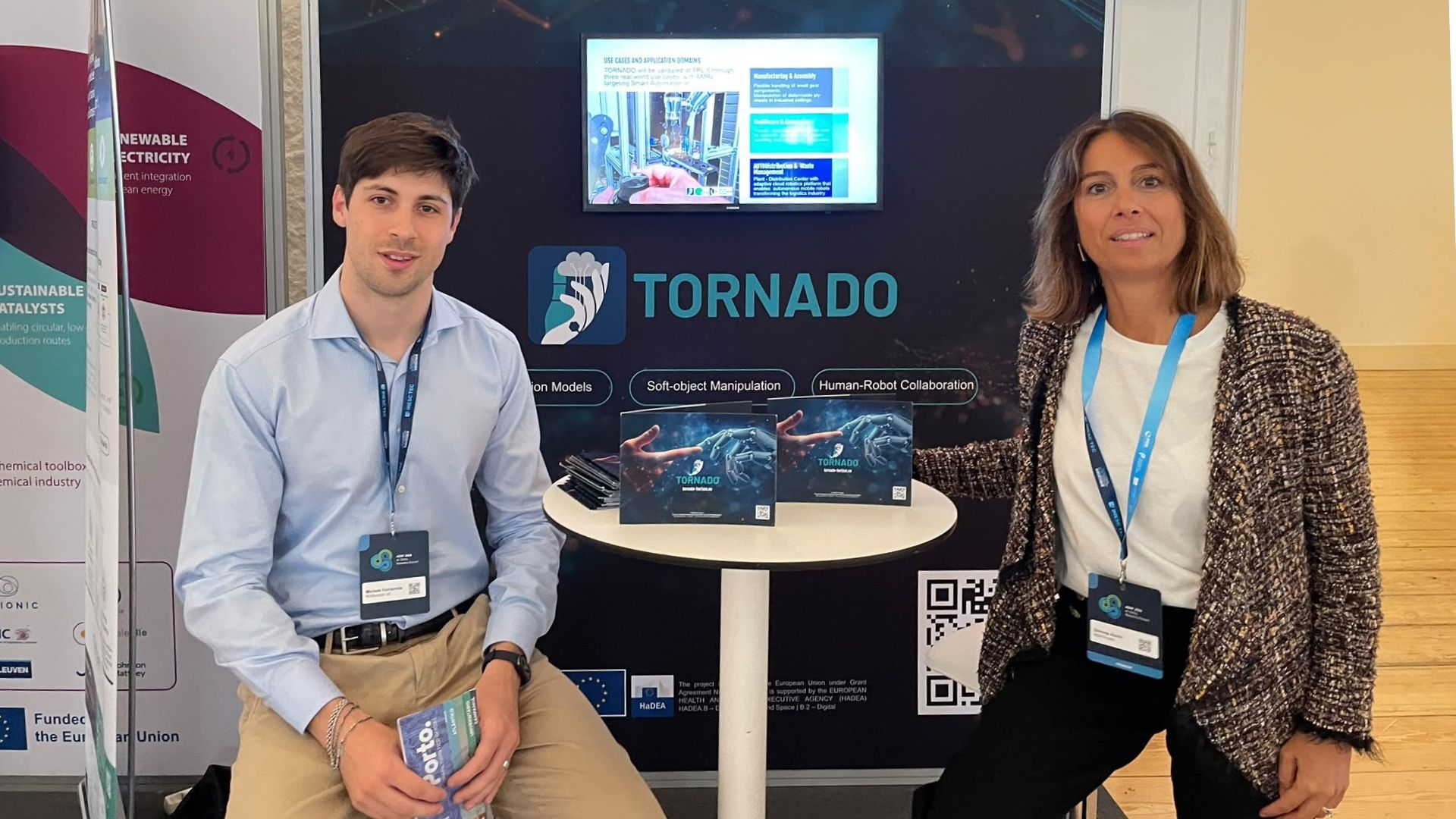
Dr. Papadopoulos also introduced the TORNADO EU project, drawing attention to its objectives, core technologies, and innovative contributions to the field of trustworthy AI in robotics.
The talk helped position TORNADO as a forward-looking initiative addressing challenges in perception, adaptability, and real-world deployment of autonomous systems.
The event was an excellent opportunity to showcase European research on a global stage and to engage in fruitful exchanges with faculty and students in one of the most dynamic tech hubs in the world.
Special thanks go to PhD researcher Aggelos Psiris for his contribution in preparing the technical content for the talk, and to the Santa Clara University community for their warm hospitality and inspiring discussion.