What do you need beyond good hands to put a robot to work in a hospital ward? And what do companies really want to know about foundation models? Here is what came out of TORNADO’s workshop at the AI, Data and Robotics Forum 2026.
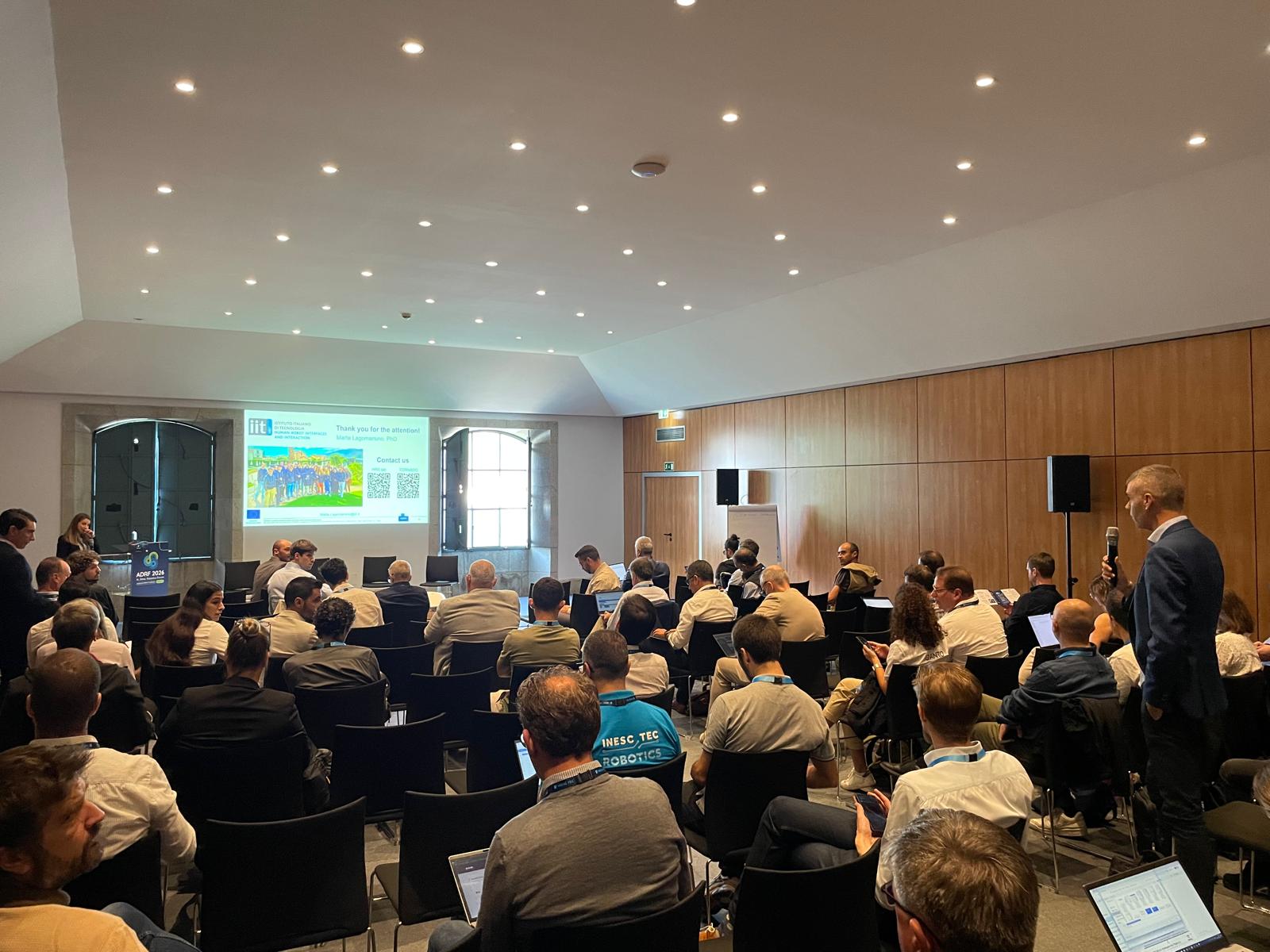
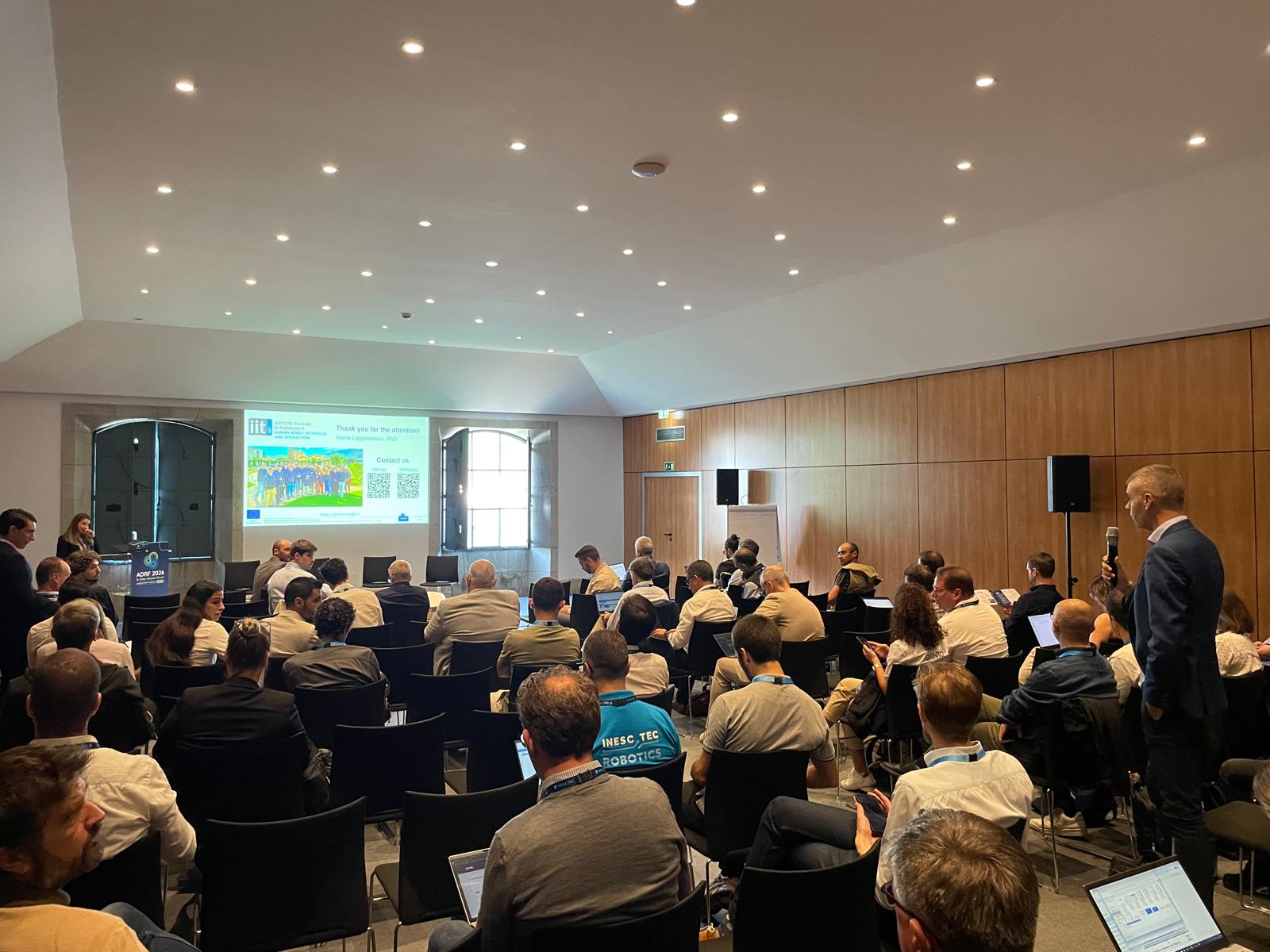
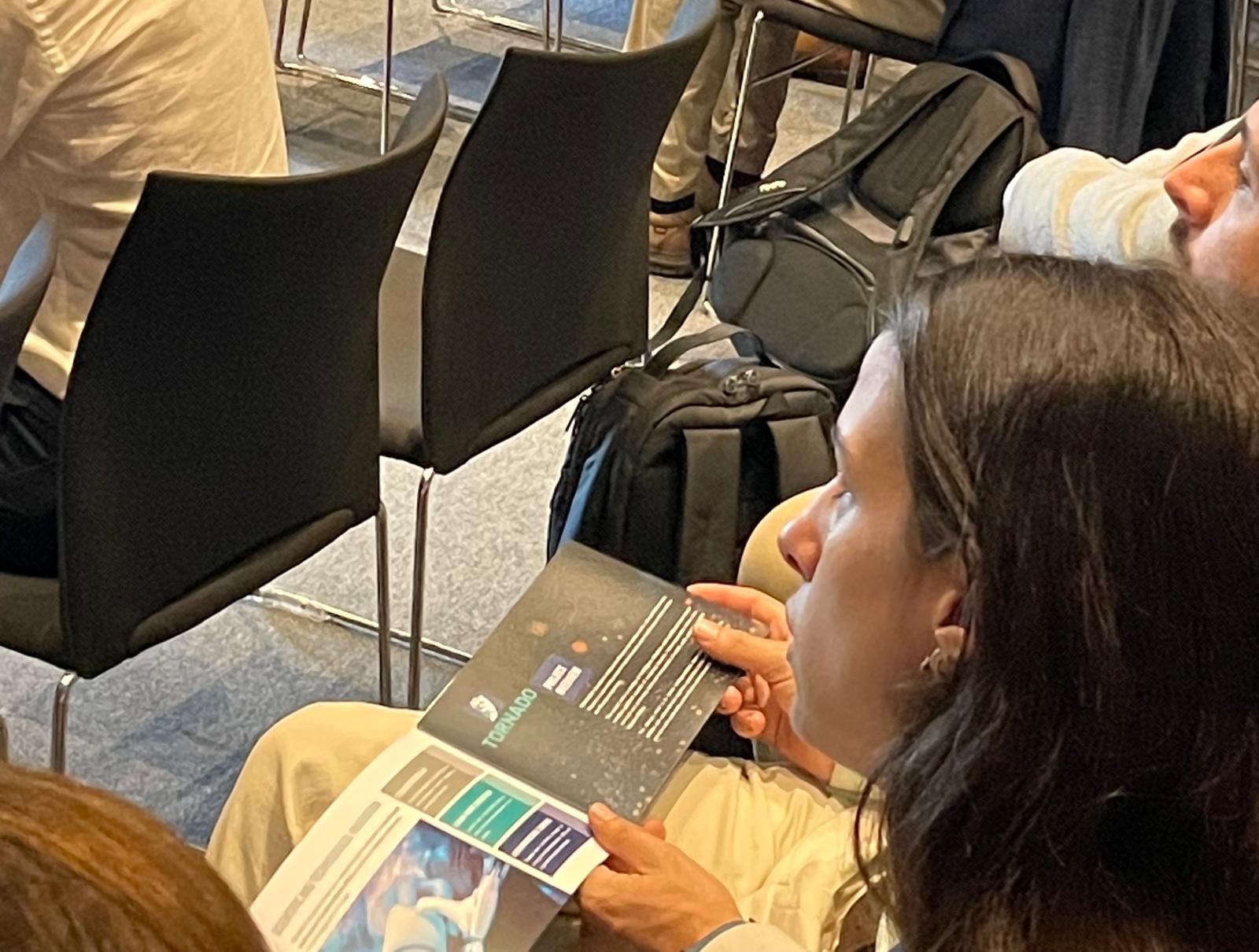
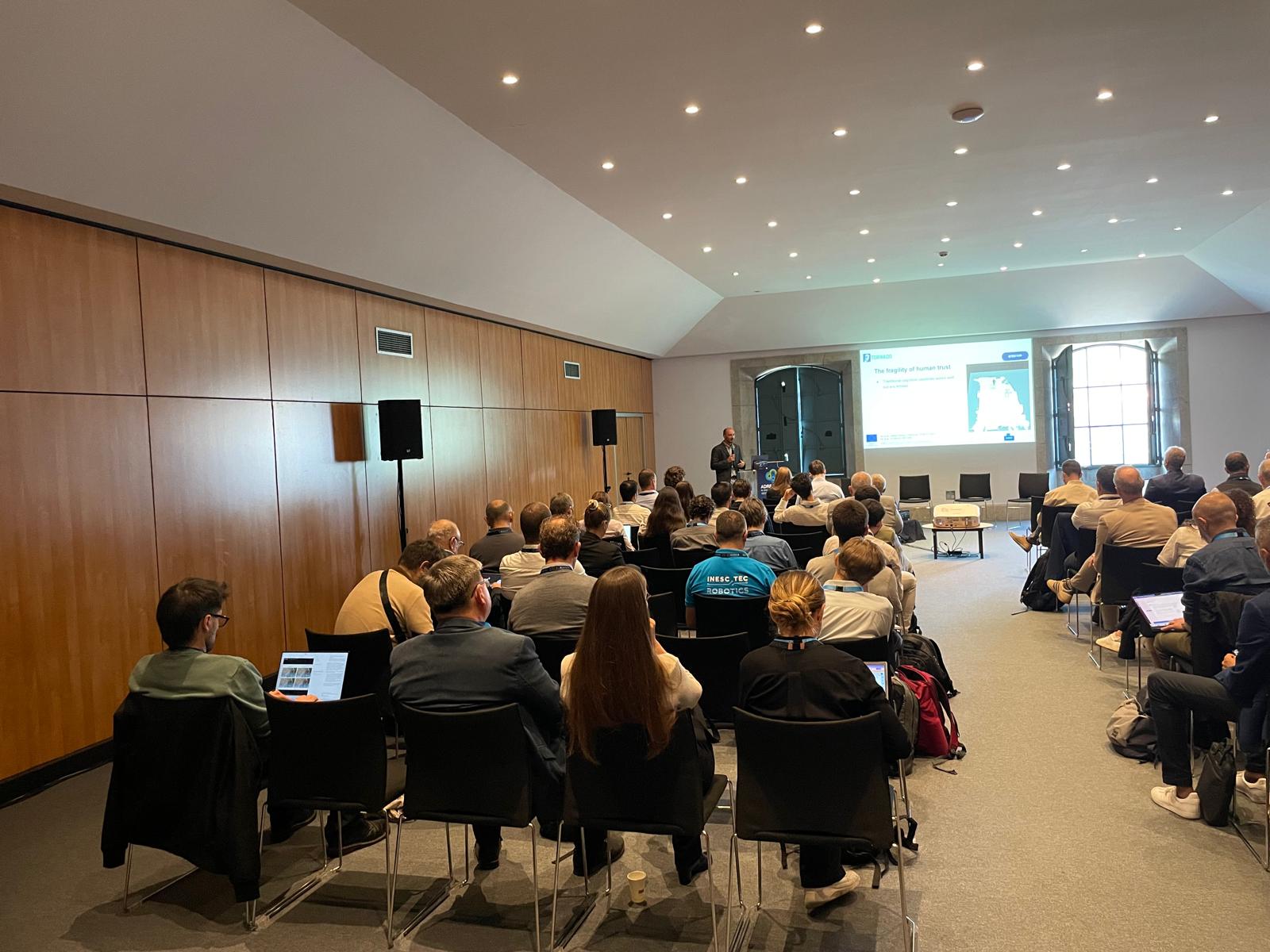
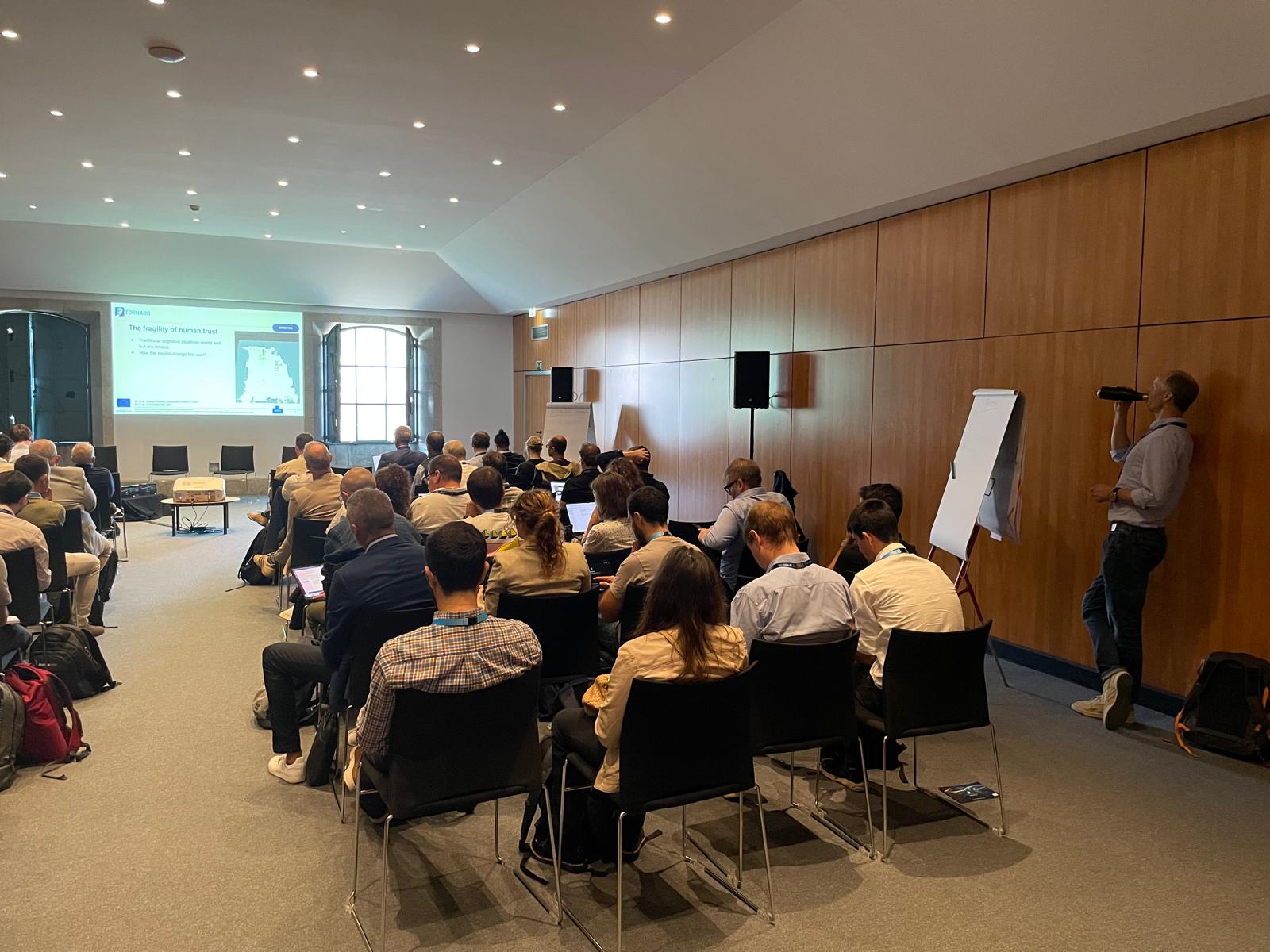
Porto, 14 October 2026. By 10:00 the Arrábida Room at the Alfândega do Porto was full. TORNADO’s workshop “When Robots Learn to Interact: Foundation Models for Human-Robot Collaboration and Dexterous Manipulation in Healthcare and Industry” brought together researchers, companies and end-users, with a TORNADO brochure waiting on every seat.
The session was introduced by Simona Aceto of NSBproject, which leads TORNADO’s communication and dissemination. Three talks followed, each looking at the same problem from a different angle: how to take robots powered by foundation models out of the lab and into real hospitals and factories.
Folding a T-shirt is harder than it looks
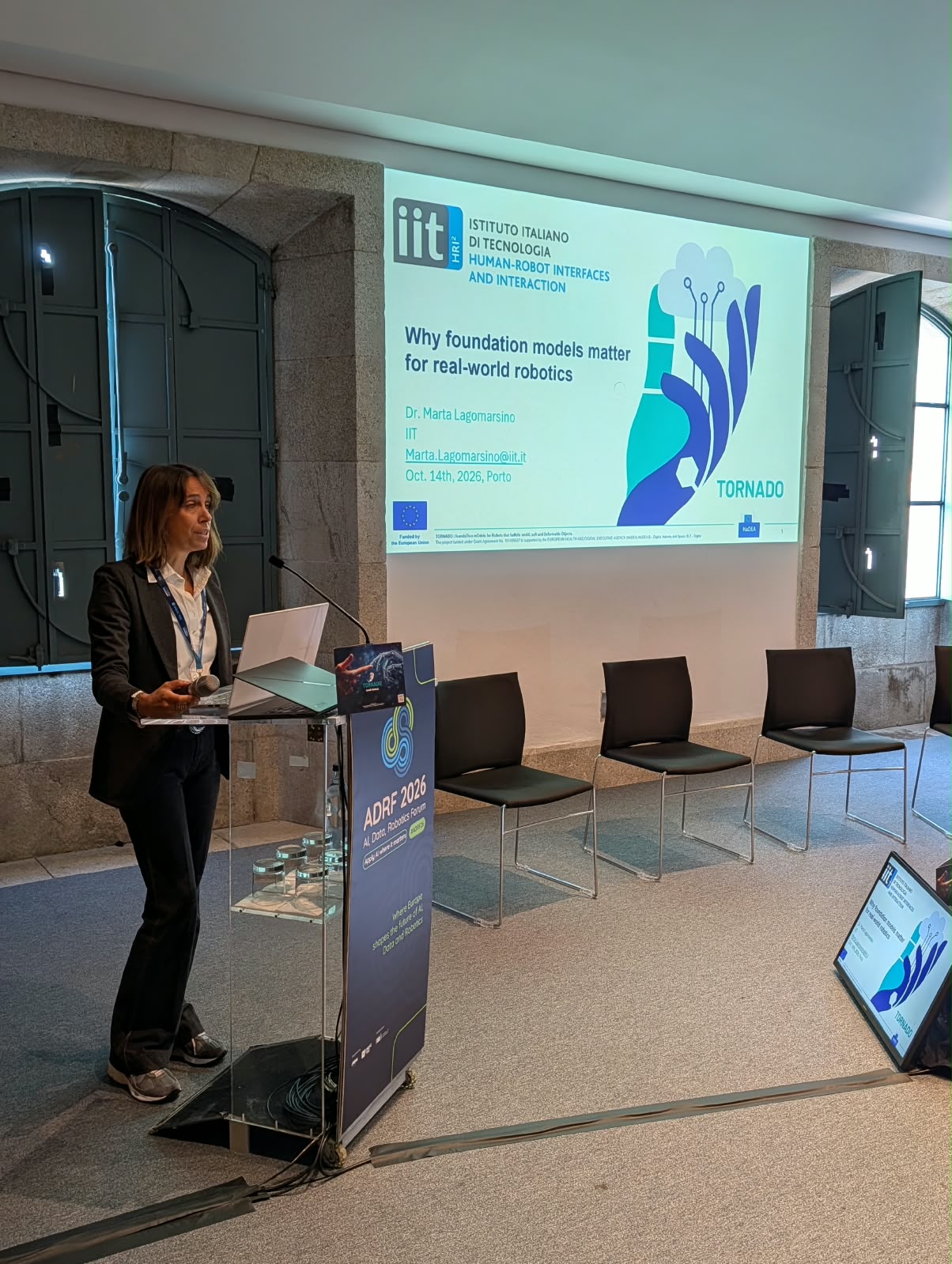
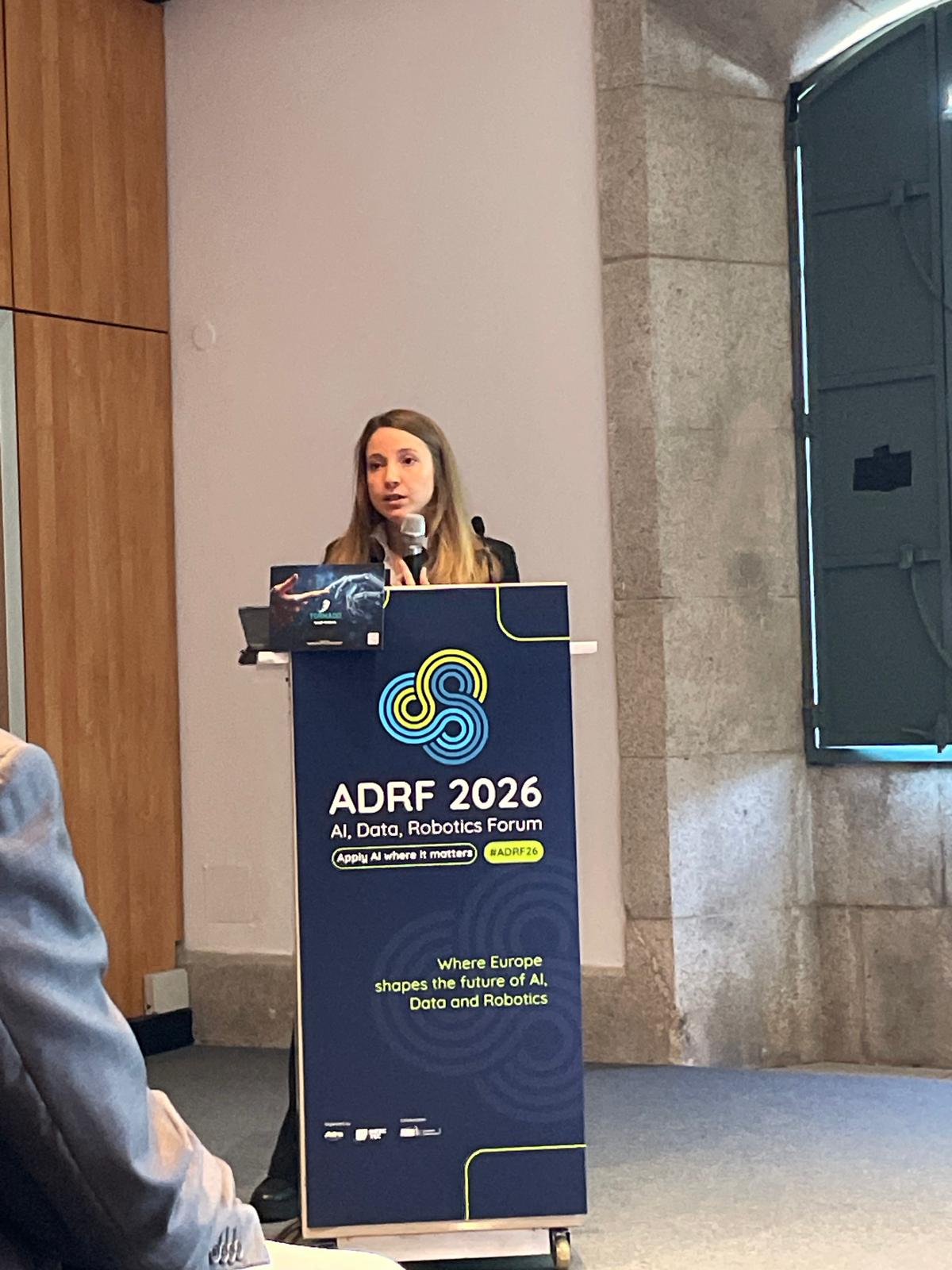
Marta Lagomarsino (Istituto Italiano di Tecnologia, HRII Lab) opened with a task that is trivial for humans: folding a T-shirt. A robot has to decide where to grasp, anticipate how the fabric will deform and adjust its motion as contact changes. Research has usually tackled each of these problems separately, with complex frameworks tailored to one scenario.
“Now imagine changing the material, the initial configuration or the instruction. How much of the solution can the robot reuse? This is where foundation models become relevant: they connect broader visual and human knowledge with the physical skills a robot needs.”
She showed how human video demonstrations, language feedback and state detection can enrich robot learning. The examples included placing and folding deformable sheets with a single camera, controlling deformable linear objects such as cables, recovering automatically from disturbances, and a library of motion strategies that the robot retrieves and adapts to the context, using the common-sense reasoning of large language models.
Assist, yield or speak up?
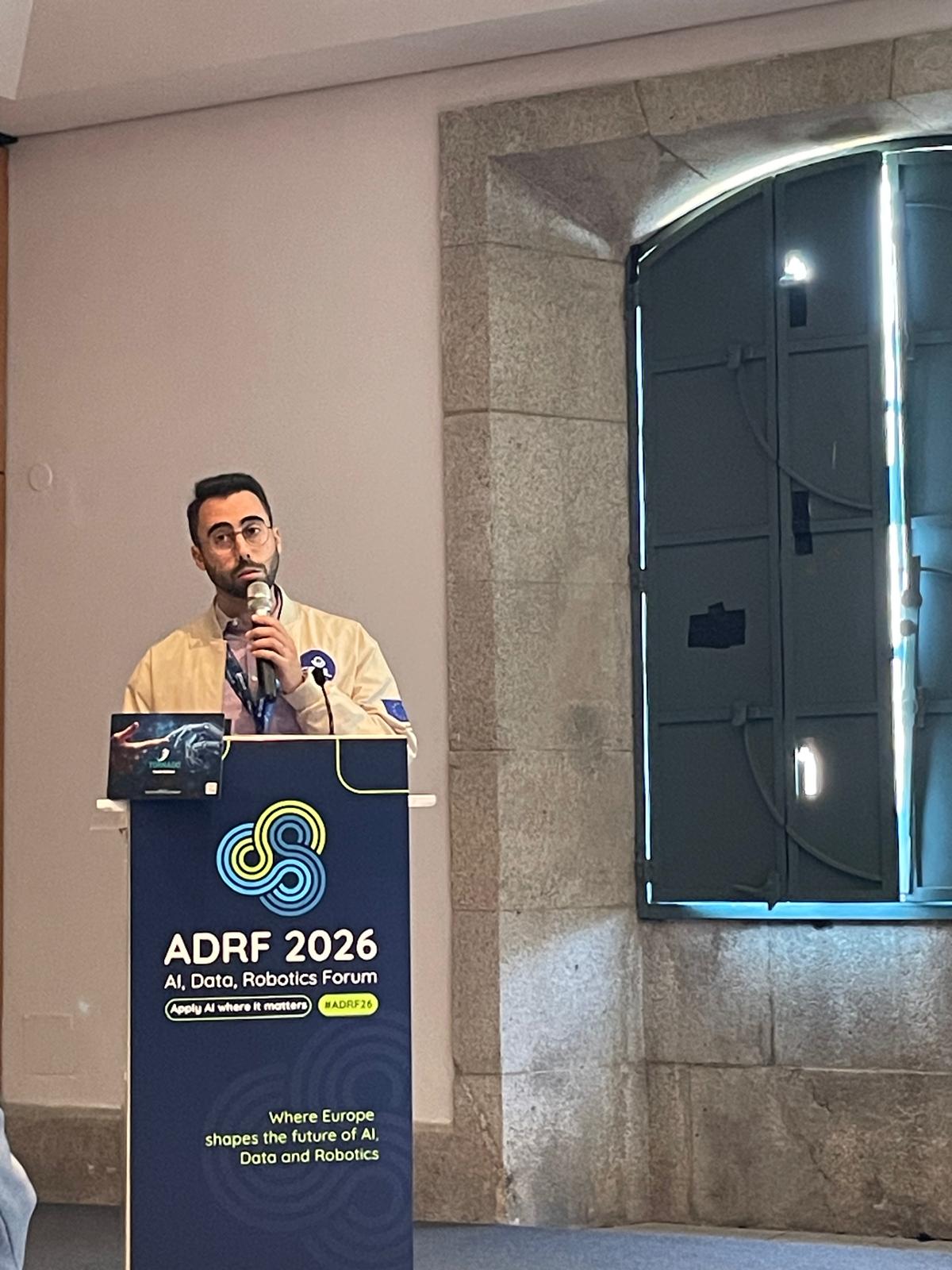
Valerio Bo (Universitat Politècnica de Catalunya and IRI) took the audience into a hospital room. A robot holds a fresh IV bag and a doctor rushes in towards the patient. Should the robot hand over the bag, step back and clear the path, or say something?
“Physical dexterity is only half the battle. The other half is social interaction: the robot has to understand what we are doing, communicate what it plans to do, and know exactly when to step in.”
His research shows how fragile human trust is. A robot that guesses intentions perfectly but too slowly breaks the flow of the interaction, while one that reacts instantly but guesses wrong loses the user’s trust. Vision-language models can act as the robot’s “semantic brain”, reasoning about what people are doing rather than tracking where they are. His experiments also show that the right moment to intervene is deeply personal: there is no universal threshold, so the robot has to learn each professional’s preferences and explain its choices.
A great demo is not a deployment
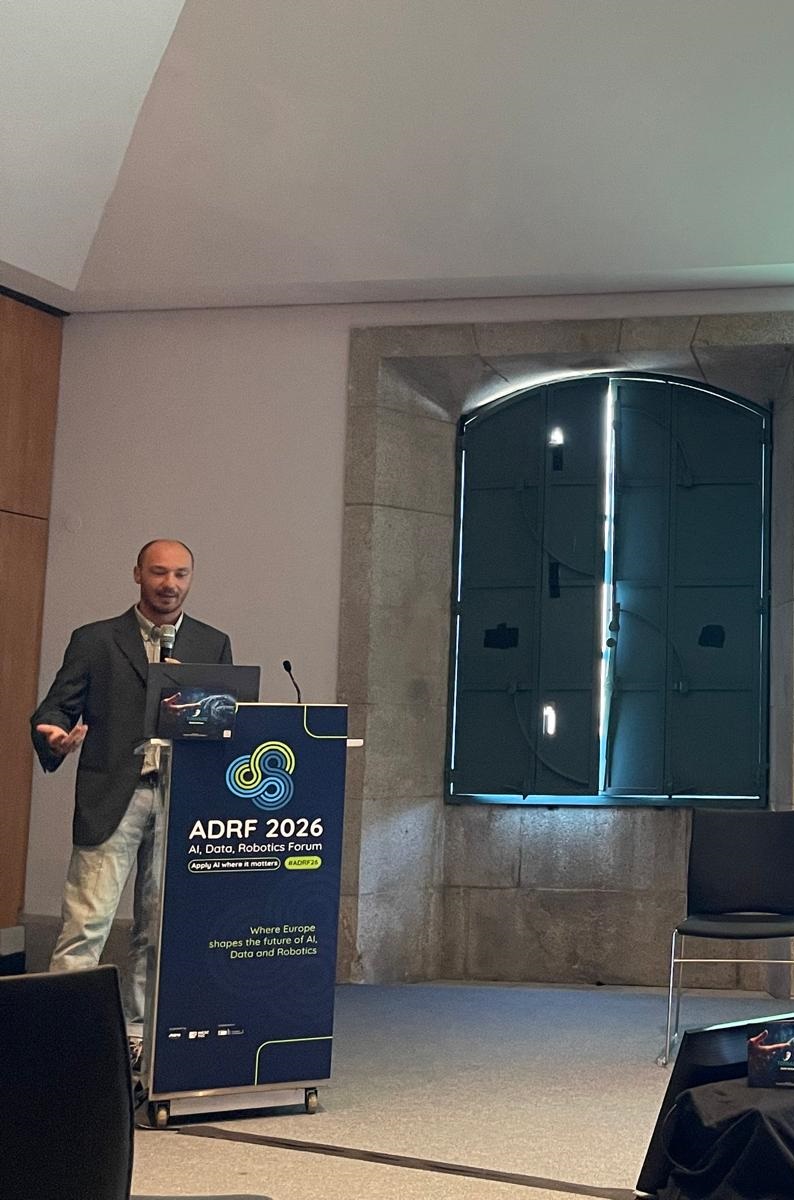
Néstor García Hidalgo (Eurecat) asked the question behind the whole session: robots can do remarkable things in the lab, so why are so few doing useful work every day in factories and hospitals?
“A great demo is not a deployment. A one-off success proves feasibility, not operational readiness.”
For him, readiness comes down to three questions that matter more than benchmarks on curated demos: does the robot work repeatedly, what happens when it fails, and does it fit the operation? He also tackled robot learning’s data problem. The answer is not to ask experts to teleoperate for thousands of hours, but to collect better data and learn more from every real-world hour, in a loop of bootstrapping, bounded pilots with human oversight, and continuous learning from outcomes and errors. He closed by presenting GRAIL, the European initiative building a trustworthy general-purpose foundation model for robotics.
What the audience wanted to know
The questions kept coming, during the session and long after it. Two themes stood out: access to the foundation models themselves, and data sovereignty. Others were driven by pure curiosity, such as how flexibly a robot can adapt the way it talks to different people.
“The room was full, and the audience asked the speakers lots of questions, both during the session and afterwards. Foundation models are a topic that interests everyone. Many companies asked about access to these models and about data sovereignty, which drew a lot of interest. The requests for access are telling: they show a real interest from industry in the artefacts and exploitable results the project is producing.”
— Michele Ferramola, NSBproject
What’s next
The three talks converged on one idea: dexterity, social judgment and validation have to grow together if adaptive robots are to be trusted in real workplaces. The insights from Porto will feed TORNADO’s work on validating robots that keep learning after deployment, and the project’s dialogue with the ADRF community.
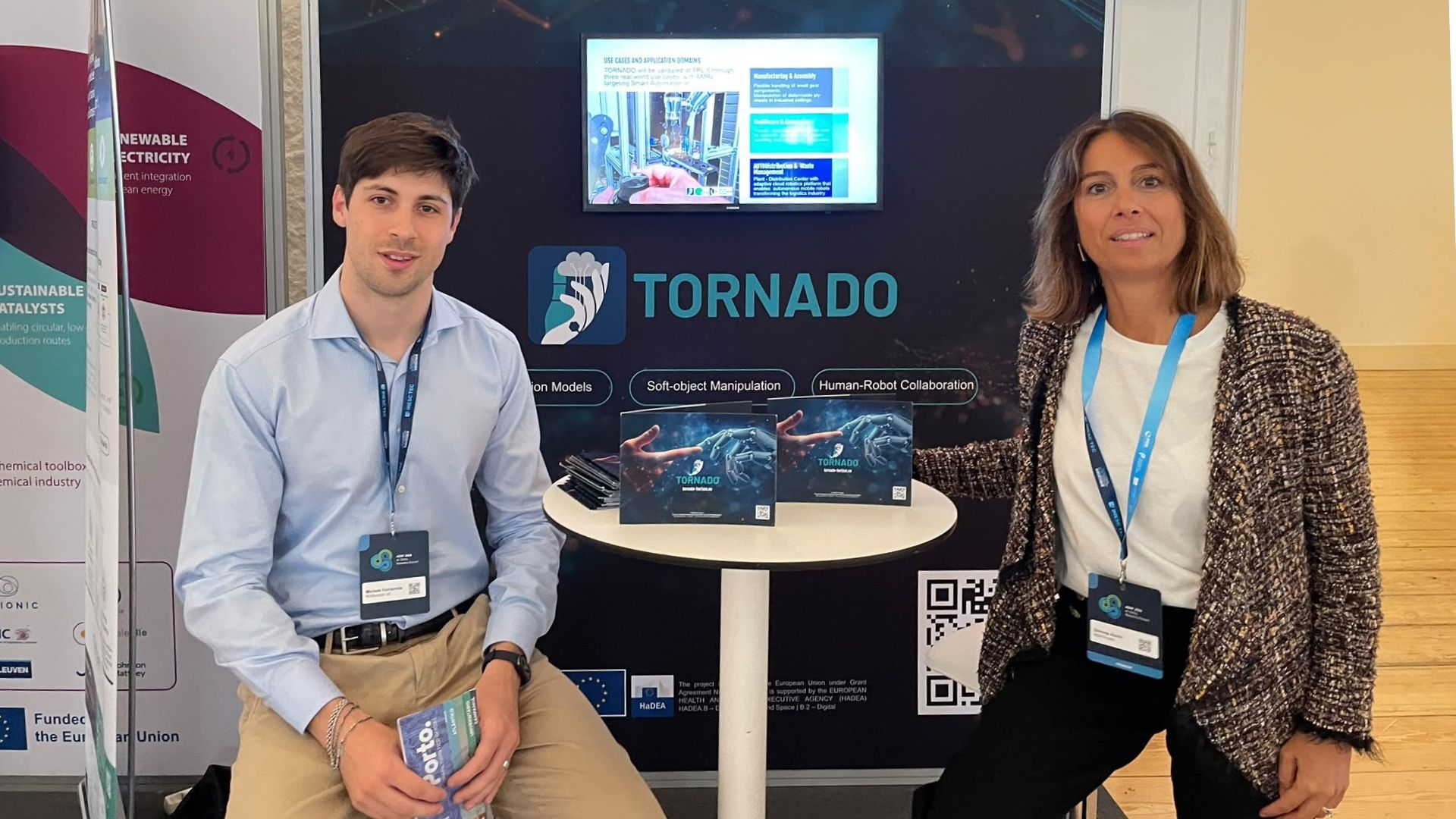
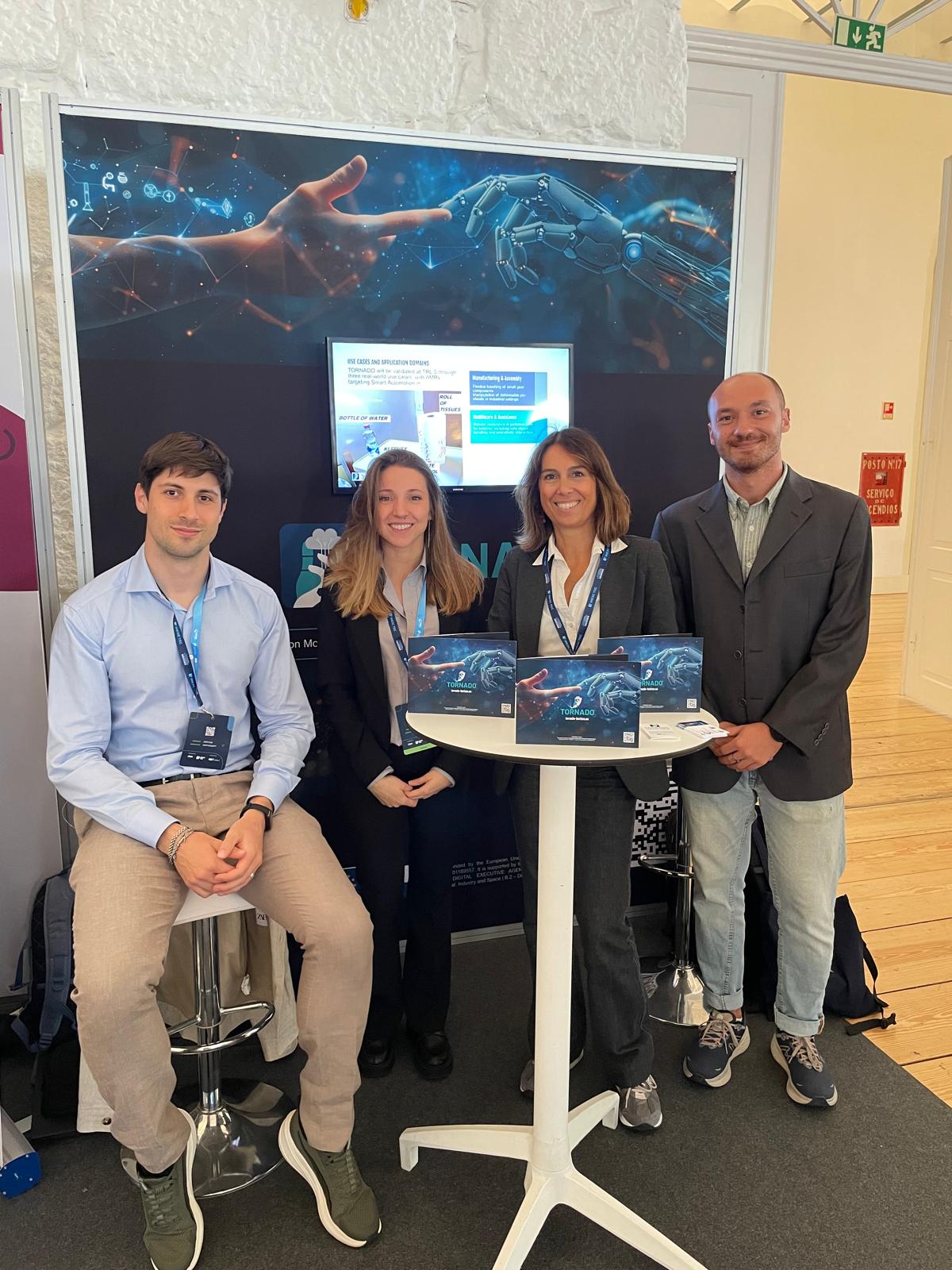
Thanks to everyone who filled the Arrábida Room, asked questions and stopped by the TORNADO booth.