Wednesday 14 October, TORNADO opens its interactive workshop at the AI, Data and Robotics Forum. It asks how a robot that keeps learning can still be validated, trusted and deployed in hospitals and factories.
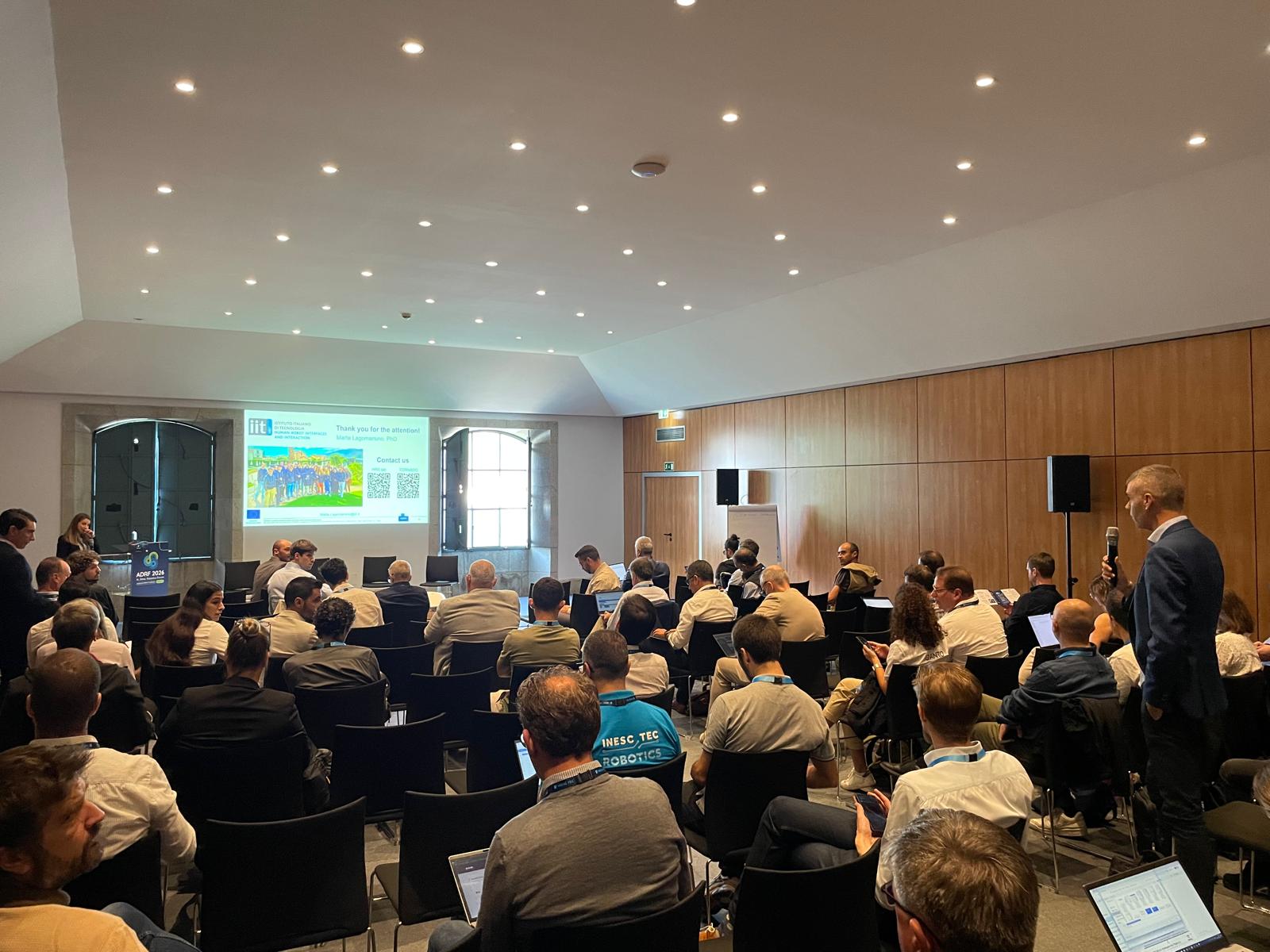
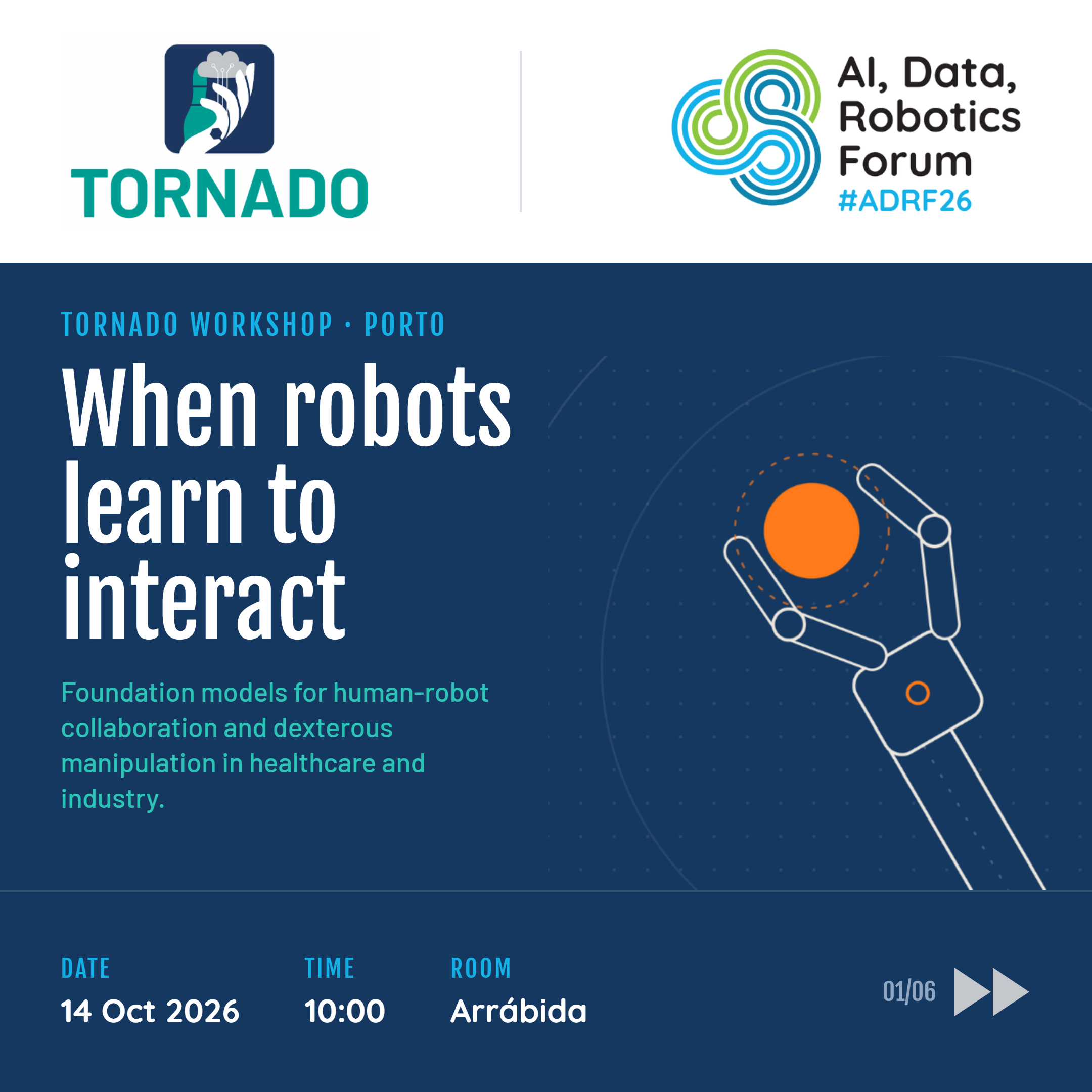
On 14 October 2026 at 10:00, in the Arrábida Room of the Alfândega do Porto Congress Centre, the Horizon Europe project TORNADO hosts “When Robots Learn to Interact: Foundation Models for Human-Robot Collaboration and Dexterous Manipulation in Healthcare and Industry”. The session is part of the official programme of ADRF26, organised by ADRA and INESC TEC on 13–14 October.
In 75 minutes, three researchers from FONDAZIONE ISTITUTO ITALIANO DI TECNOLOGIA (IIT), UNIVERSITAT POLITECNICA DE CATALUNYA (UPC) and Eurecat set the scene. Then the audience goes to work on one of the hardest open problems in physical AI.
Why it matters: the gap between demo and deployment
Large language models, vision-language models and multimodal perception are changing how robots perceive, reason, communicate and act. Getting them out of the lab is another matter. It is hardest when the objects are small, soft, delicate or deformable, and the space is full of people.
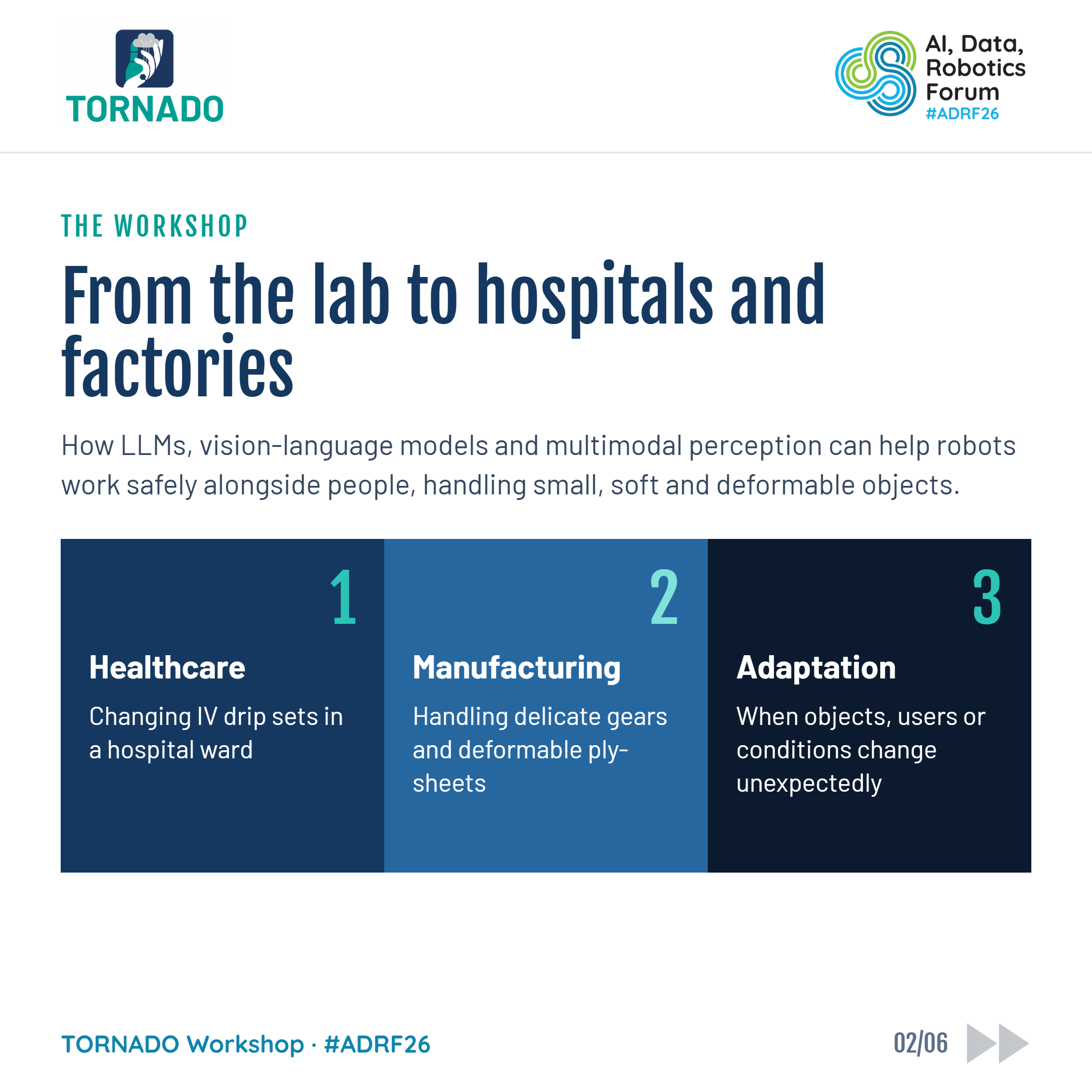
The workshop grounds this gap in three concrete TORNADO scenarios:
- Healthcare: changing IV drip sets on a hospital ward.
- Manufacturing: handling delicate gears and deformable ply-sheets.
- Adaptation: coping when objects, users or conditions change unexpectedly.
The discussion covers safety, validation, human trust, domain adaptation, regulatory readiness and value creation with end-users. It ties directly into the ADRF26 themes of resilience, competitiveness and strategic autonomy. The aim is human-centred physical AI: robots people can instruct in natural language, teach by demonstration and understand through explainable decisions.
Three talks, three angles
| Time | Talk | Speaker |
|---|---|---|
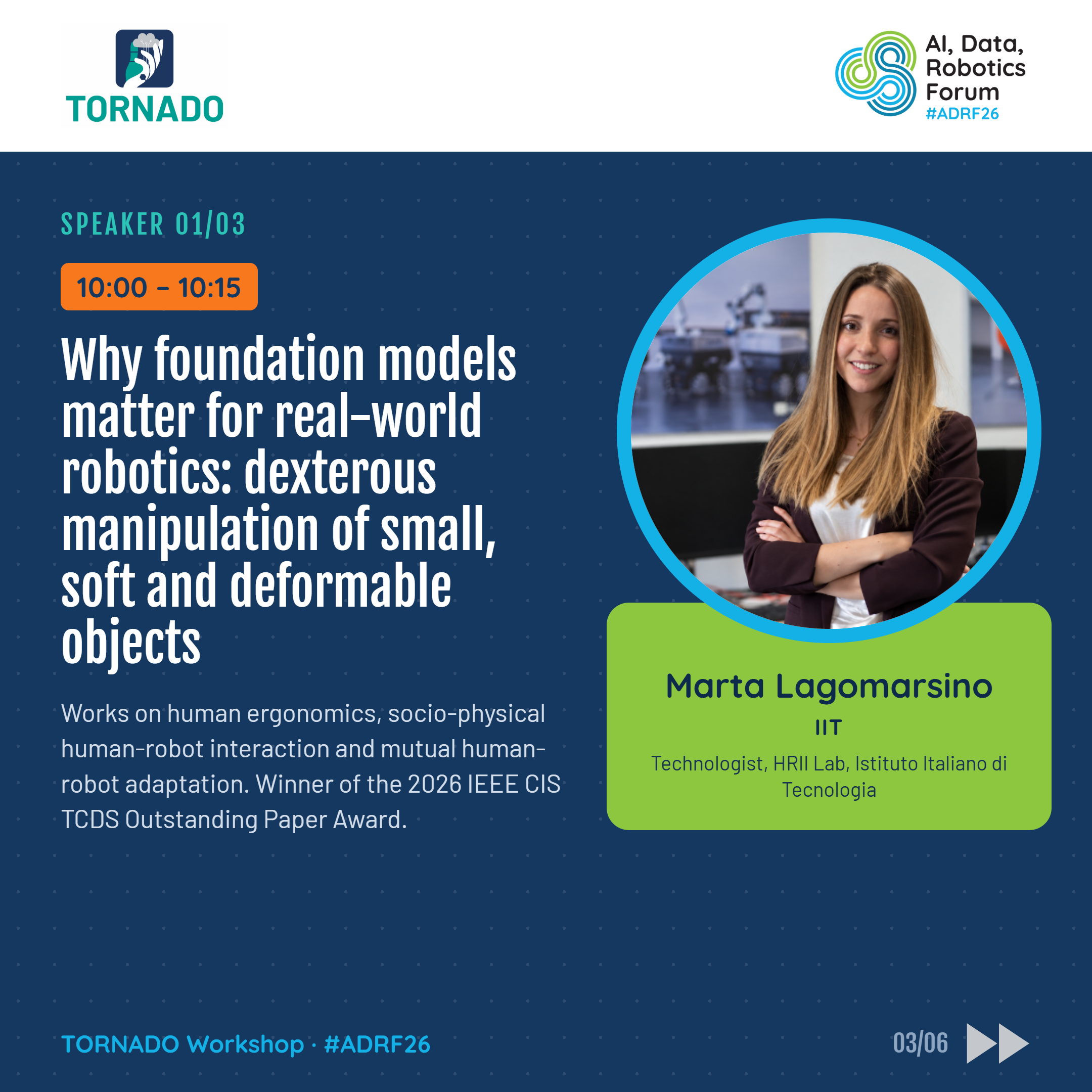
| 10:00–10:15 | Why foundation models matter for real-world robotics: dexterous manipulation of small, soft and deformable objects | Marta Lagomarsino, Technologist, HRII Lab, Istituto Italiano di Tecnologia (IIT) |
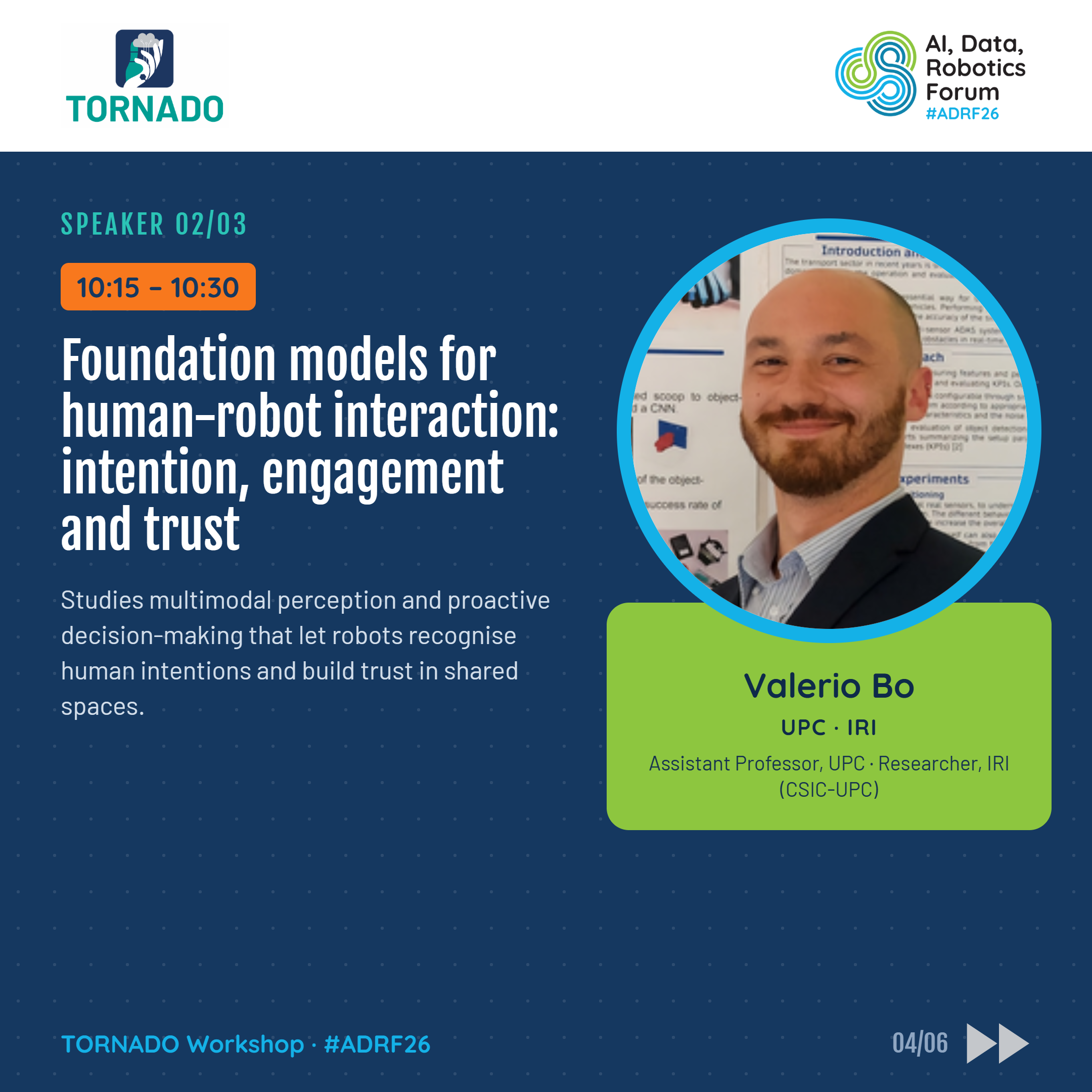
| 10:15–10:30 | Foundation models for human-robot interaction: intention, engagement and trust | Valerio Bo, Assistant Professor, UPC, and Researcher, IRI (CSIC-UPC) |
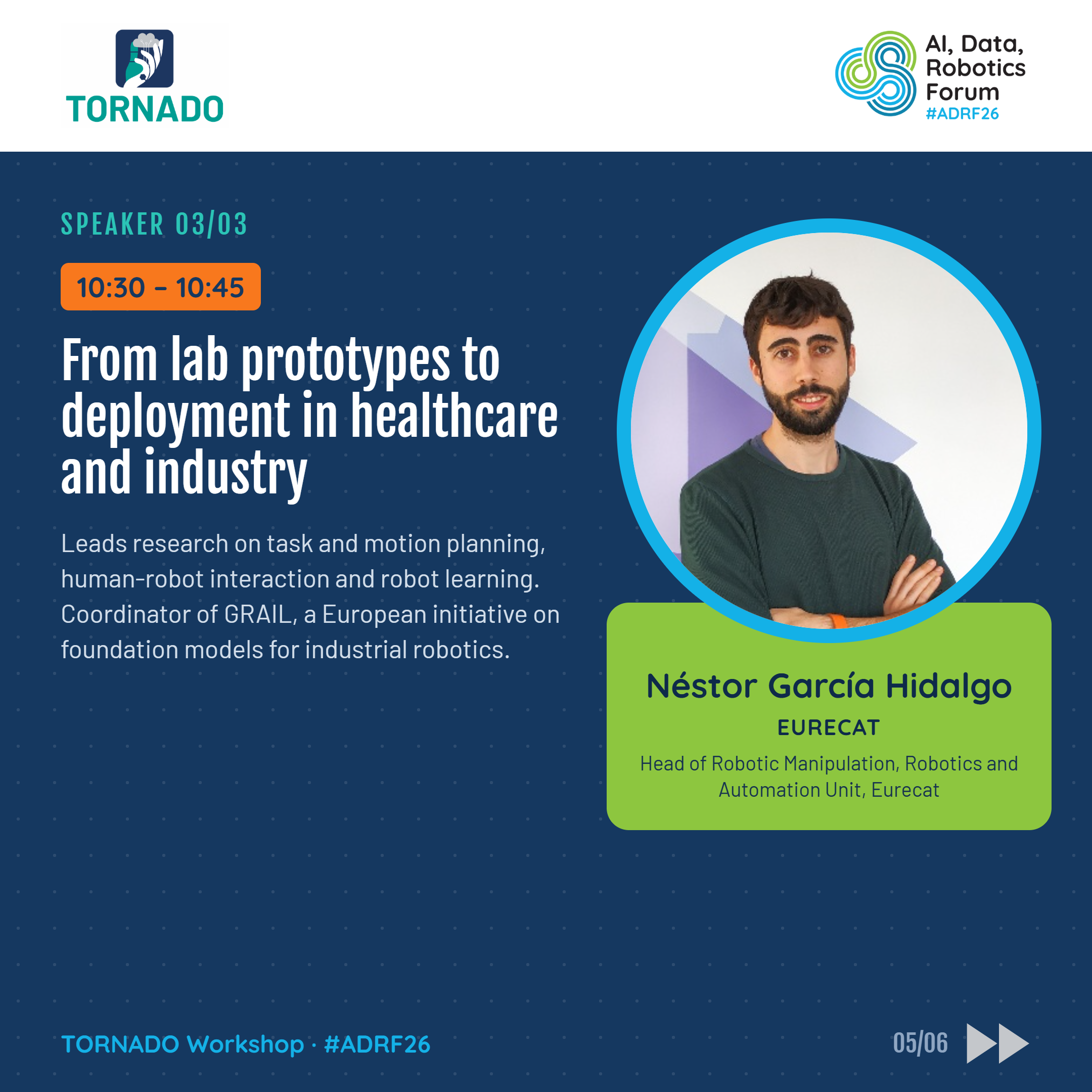
| 10:30–10:45 | From lab prototypes to deployment in healthcare and industry | Néstor García Hidalgo, Head of Robotic Manipulation, Robotics and Automation Unit, Eurecat |
Marta Lagomarsino works on human ergonomics, socio-physical human-robot interaction and mutual human-robot adaptation, and contributes directly to TORNADO. Her awards include the 2026 IEEE CIS TCDS Outstanding Paper Award.
Valerio Bo studies the multimodal perception and proactive decision-making that let robots recognise human intentions and build trust in shared spaces. He holds a PhD in Robotics from the University of Siena and IIT.
Néstor García Hidalgo leads Eurecat’s research on task and motion planning, human-robot interaction and robot learning. He also coordinates GRAIL (Generative AI for Robotics & Industrial Automation), a European initiative on foundation models for industrial robotics.
Then the audience takes the lead
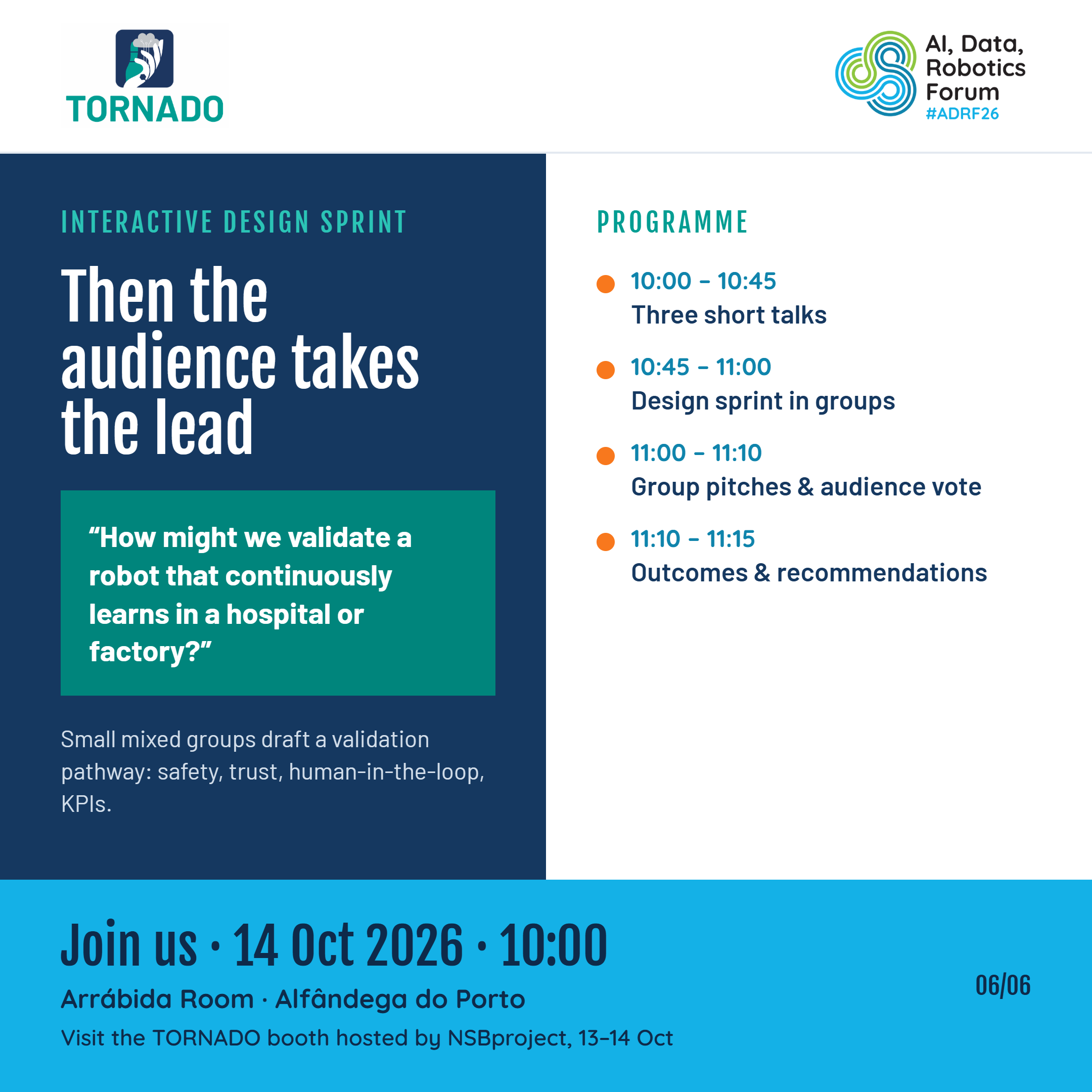
At 10:45 the session becomes a design sprint around one question: “How might we validate a robot that continuously learns in a hospital or factory?”
Participants work in small mixed groups. Each picks a scenario: a robot learning to change IV drip sets, a mobile manipulator handling ply-sheets, or a robot adapting to new objects and instructions. Each group then drafts a validation pathway covering:
- technical, safety and trust requirements;
- human-in-the-loop mechanisms;
- measurable KPIs;
- the evidence end-users need before they adopt the system.
Groups pitch their pathway in two minutes each at 11:00, the room votes, and the session closes at 11:15 with shared outcomes and recommendations.
The goal is a practical roadmap from prototype to trustworthy deployment. Expected results are a short list of deployment barriers for foundation-model-based robotics, practical validation criteria for adaptive robots, recommendations for European research, innovation and industrial uptake, and possible links to ADRA Topic Groups and future collaborative initiatives.
Validation runs through the whole project
“Foundation models give robots the ability to keep learning on the job, and that is exactly what hospitals and factories need: tasks change, objects vary, and no two days are the same. But a robot that adapts is also a robot whose behaviour evolves after it has been certified. Nurses, operators and safety managers will only welcome these systems if they can trust them, which means being able to check, explain and validate what the robot has learned at every stage. That is why validation is not the final step of TORNADO, but something that runs through the entire project. In Porto, we want to work with the ADRF community on practical, shared criteria that turn adaptive robots from impressive prototypes into tools Europe’s hospitals and industries can confidently adopt.”
— Nikos Nikolaou, Project Coordinator, ITML
Join us in Porto
| >> PRESS RELEASE | >> WORSKSHOP OVERVIEW |
|---|---|
| Workshop | 14 October 2026, 10:00–11:15, Arrábida Room |
| Venue | Alfândega do Porto Congress Centre, Porto, Portugal |
| Programme | Workshop page on adrforum.eu |
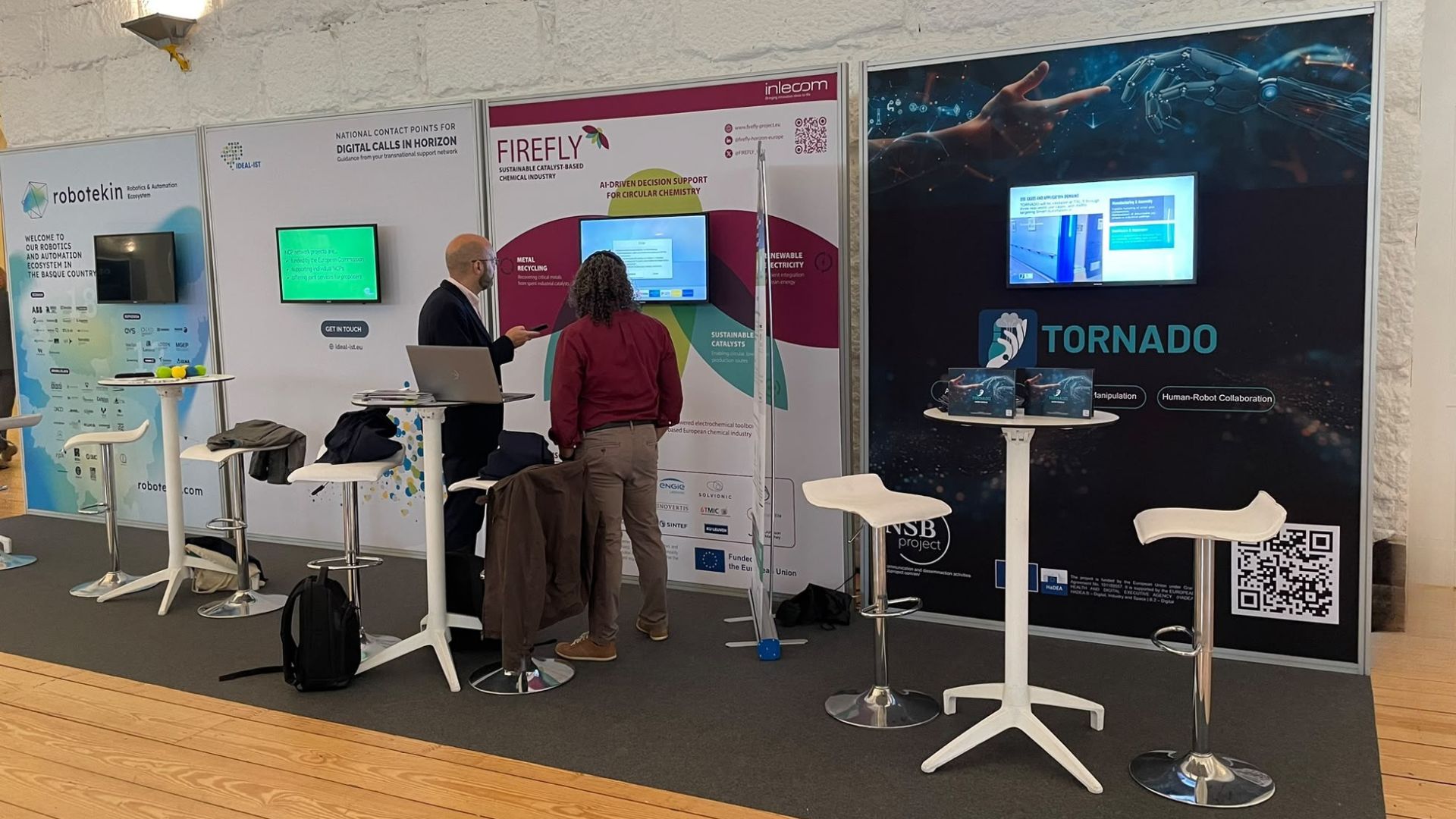
| Booth | TORNADO booth hosted by NSBproject, open 13–14 October |
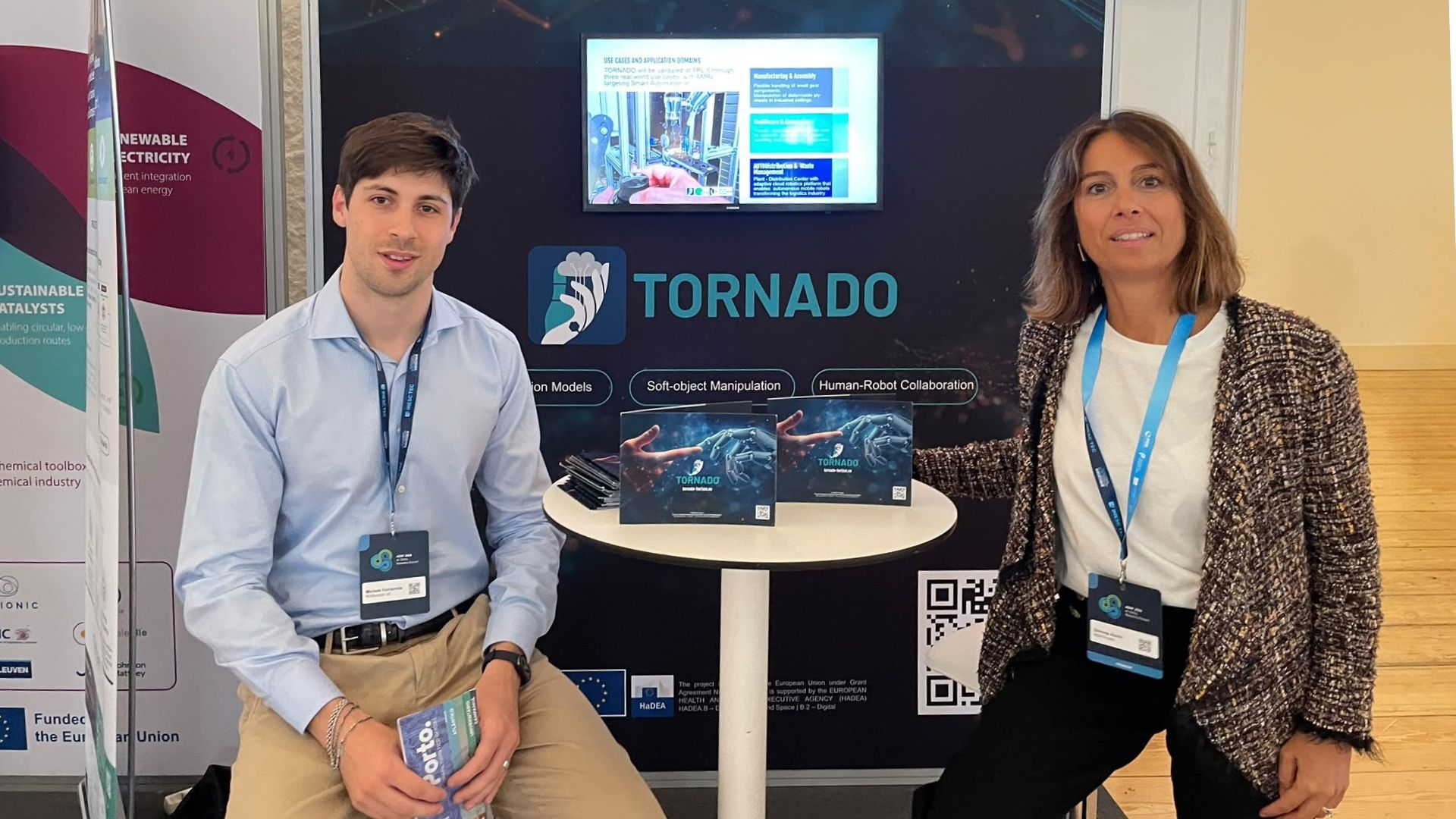
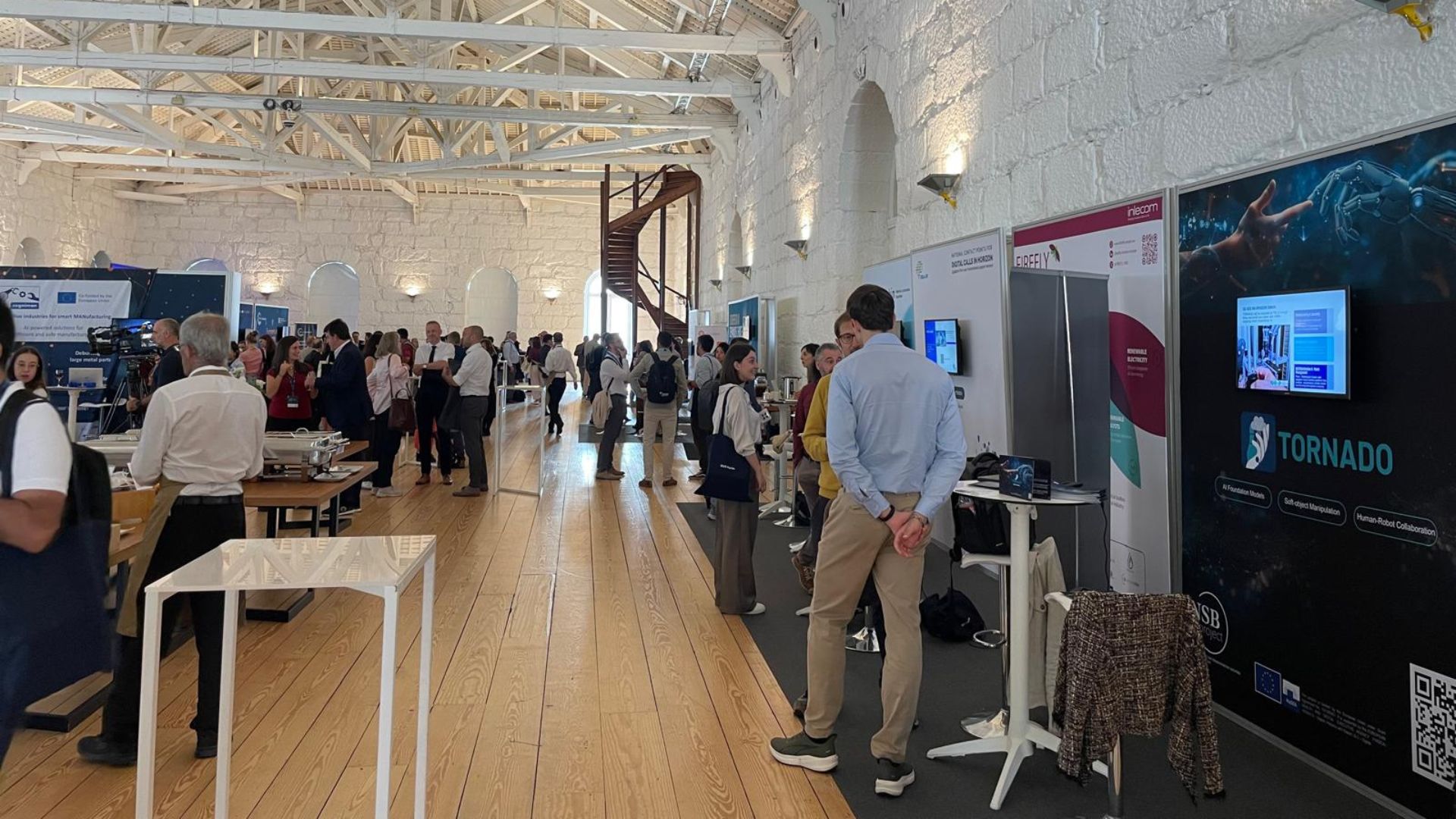
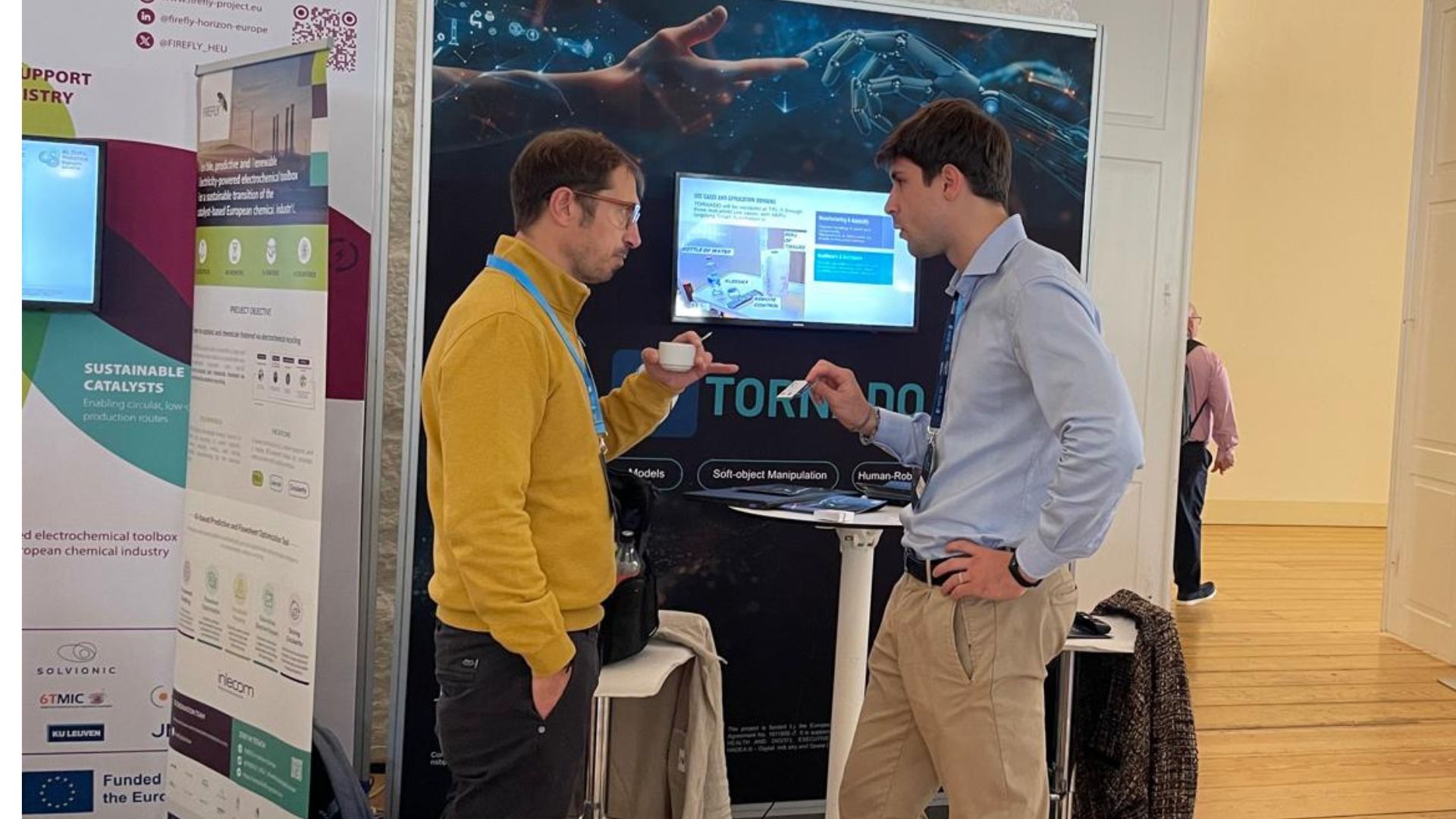
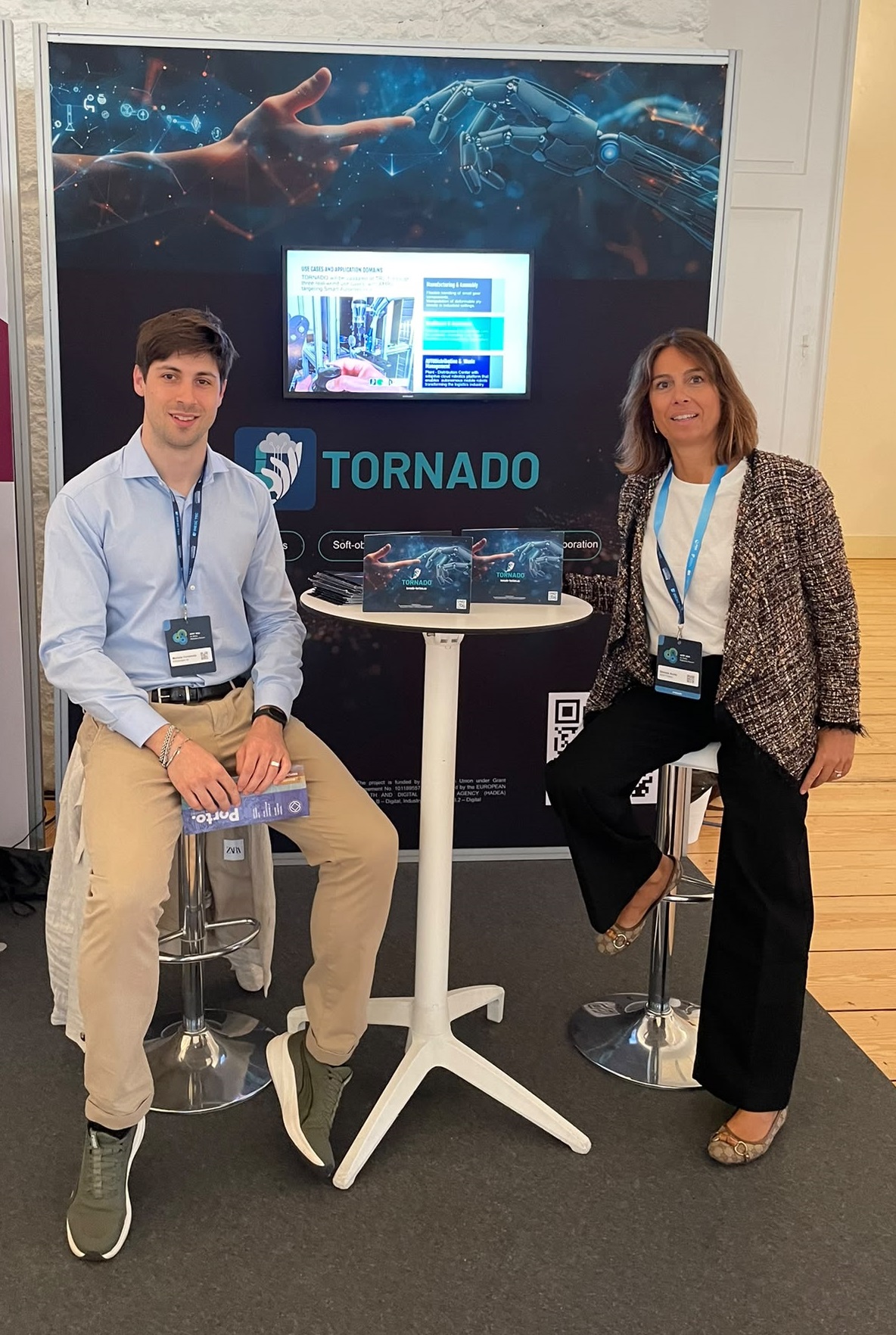
Can’t make the session? Stop by the TORNADO booth at any time during the forum to talk about the project, its use cases and the work under way.